|
DroneAdventures.org
is a Swiss “non-profit” organization that in April 2013 sent two
representatives to Haiti to work with a couple of “non-profits”
called Open Street Map and International Organization for
Migration. For six days with three drones and several lap-top
computers these “drone adventurers” mapped 1) shanty towns in
Port au Prince to count the number of tents as a first step in
making a census and organizing “infrastructure,” 2) river beds
to simulate water flow for future flood control, and 3) the
University of Limonade “to help promote the school for the next
generation of youth in Haiti.”
These drone promoters also made
a
cheerful video with a happy
sound track, pretty pictures of the blue sky, and scores of
children running after these pied pipers launching their
falcon-like drones as if the children too could fly as easily
out of the man-made disasters of life.
“Have you ever wondered how
important it is to have detailed and up-to-date maps of a
territory?” the drone promoters ask. Not only do we know they
are important, we know enough to view them with suspicion.
Historically, cartography developed in Europe for military,
commercial, and exploitive purposes. “There is a continuous need
for up-to-date imagery for aid distribution, reconstruction,
disaster mitigation … the list goes on.” Indeed the list does
go on, directly to bombing. These things are not for our own
good, though every effort is made to start out that way.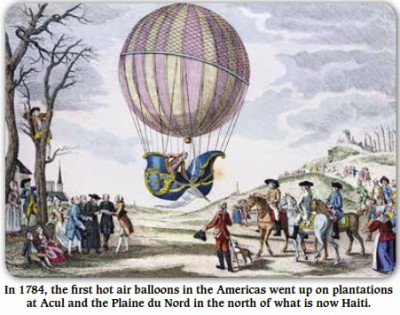
The map depends on the
bird’s-eye view, or the perspective from above. This viewpoint
gave not only amusement but the illusion of omniscience which
heretofore in European history had been reserved exclusively to
the European divinities. The bird’s-eye view also inspired the
Romantic movement of Europe. The viewpoint keeps us gaping
upwards into the sky, and ignoring everything around us. The
viewpoint initiates the class analysis and profound vision of Volney’s Ruins (1792) and Shelley’s Queen Mab
(1812).
We have seen something like
this before, with the origin of the bird’s-eye view. Consider
the great French philosopher, Condorcet, or consider the
brilliant American bourgeois, Benjamin Franklin. They both
welcomed the first hot-air balloons on 11 September 1783 (oh,
date of terror and dread!) which made the viewpoint possible.
They noted the combination of present amusement and potential
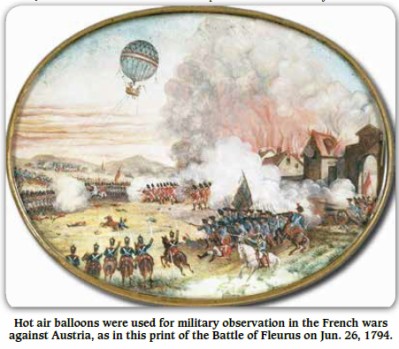
power of the balloon. A decade later the balloons were manned
for military observation in the French wars against Austria.
They are the ancestors of the dirigible, the airplane, (the
bomber and the fighter), the rocket, and now the drone. The
“bird’s-eye view,” and the aerial machines it makes possible,
led directly to Guernica and Hiroshima.
Horace Walpole, the English
novelist wrote in 1783 as the first balloon ominously ascended
over the countryside, “the wicked wit of man always studies to
apply the results of talents to enslaving, destroying, or
cheating his fellow creatures.” We could not express the
essential contradiction better: technology and slavery went
hand in hand.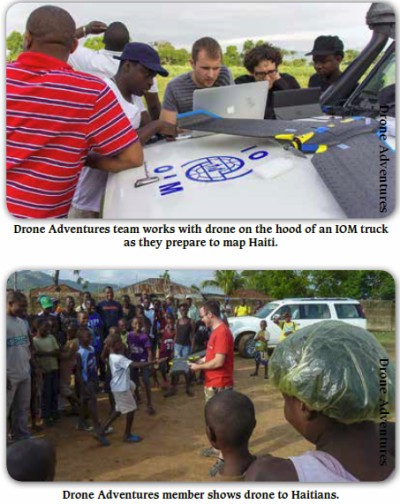
Within a year in Haiti, the
first balloons went up on the Gallifet plantations at Acul and
the Plaine du Nord. Here 800 slaves producing riches for Europe
were managed by Odelucq, the man responsible for the balloon
launch, indeed the first flight in America. What did the slaves
think? Did they stare up into the blue sky with wide eyes and
gaping mouths? Moreau, the contemporary scholar, provides the
answer, “black spectators did not allow themselves to cry out
over the insatiable passion of man to submit nature to his
power.”
“The wicked wit of man”
belonged to the European bourgeoisie not the black spectators.
“How can we make a lot of sugar when we work only 16 hours [a
day]?” asked Odelucq. Only by consuming men and animals, he
answered himself.
The men and women would not be
consumed so easily. They taught the children not to run after
false gods or to Europeans preaching technological salvation.
The spiritual, military, and social leaders of the slaves
appealed to African sky-gods who answered with thunder and
lightening on the historic night of 23 August 1791 in the Bois Caïman, thus initiating the first successful slave revolt in the
history of the world. It began on the same plantations which had
been Odelucq’s proving grounds. The sky above Le Cap turned dark
with the smoke of burning plantations. Odelucq was among the
first of the oppressors to pay with his life. Surveillance was
answered by sousveillance!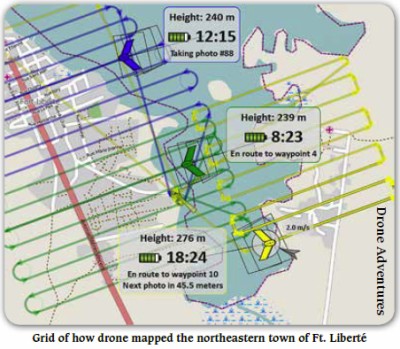
The drones which today
indiscriminately kill men, women and children in Pakistan and
Yemen appeared first in the history of the technology as
children’s toys, not weapons. Beware, the cunning eye of the
master class is on you!
Peter Linebaugh is a
historian at the University of Toledo and the author of the
forthcoming “Stop Thief: The Commons, Resistance and Enclosure.” |





